
Why You Leave Virtual Meetings Uncertain About What Just Happened
WeEngage Team ·
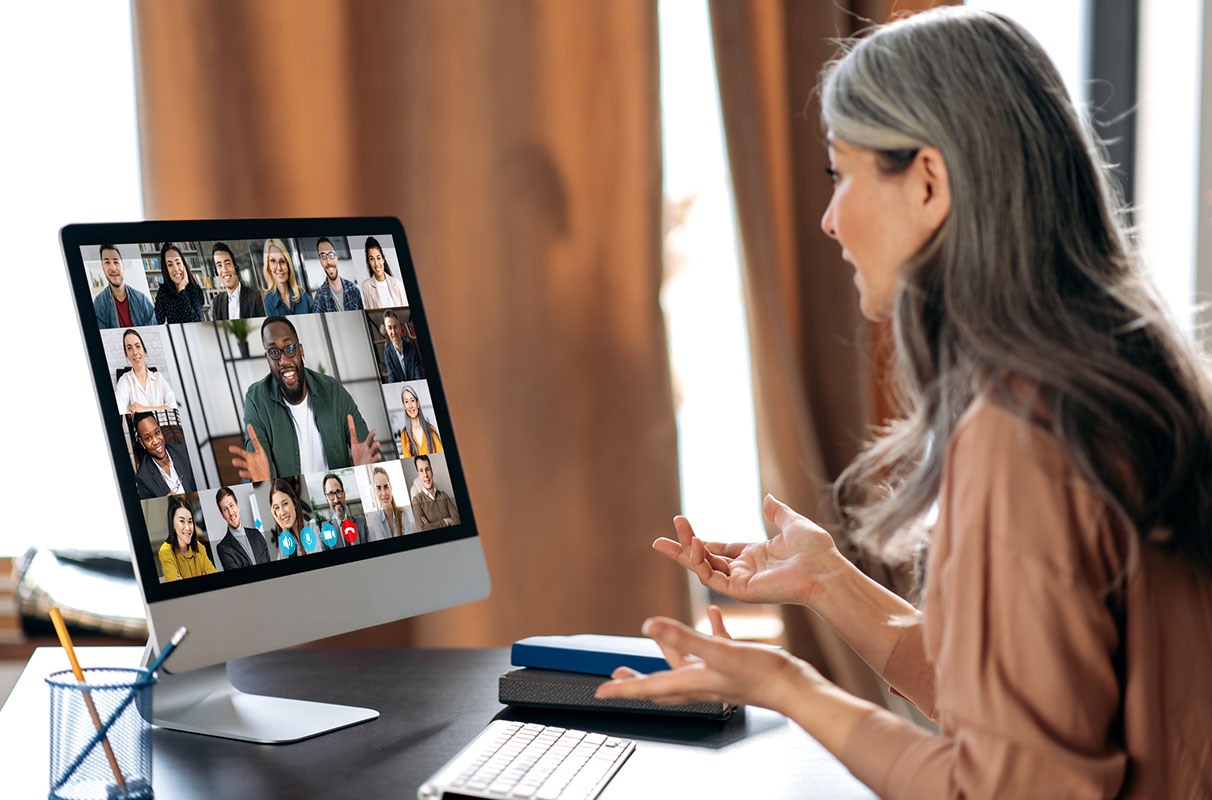
We don't reach shared understanding by accident. It requires intention and structure.
We hold the meeting, rehash the problem, brainstorm ideas, make decisions—and still walk away feeling uncertain about what actually happened.
- Were all voices heard, or just a select few?
- Did we really reach a conclusion, or did we just rush to end things?
- Were we all there for the same reason?
- Did we share ownership of the outcome, or are we relying on the same person to push things forward?
Almost everyone recognizes this feeling. But we blame it on communication, or on people not paying attention, or on a lack of clear decision-making. We rarely blame the structure itself.
The Virtual Collaboration Gap
Here's what's actually going on: our brains didn't evolve to process social cues behind a screen. That's not a limitation you can overcome with better video quality or more frequent check-ins—it's a constraint you have to design around.
In a physical room, shared understanding emerges naturally from body language, spatial proximity, and real-time verbal exchange. A facilitator can read the room, sense when someone wants to speak, notice when energy has shifted, and pivot on the fly. There's a continuous feedback loop between what's being said and what people are absorbing.
On video, that feedback loop breaks. A facilitator can't easily read the room when they're looking at tiles. Quiet people stay quiet not because they have nothing to say, but because they can't find the moment to jump in—there's one microphone and someone else already has it. People who process deeply and need time to formulate their thoughts get left behind. By the time they're ready to weigh in, the group has already moved on.
The result: fragments instead of clarity.
Some people contributed their immediate reaction. Others didn't contribute at all. A few shaped the direction. The decision-maker formulated next steps based on partial information. And when the meeting ended, no one was entirely sure what was decided or why, because the full thinking of the room never actually surfaced.
This isn't a communication problem. It's a structure problem. Virtual meetings don't self-organize. Participation is unequal, and some people process quickly and speak up in the moment while others think deeply and need space to formulate their response. Without structure, both kinds of thinking get missed or muddled. We fail to leverage the strengths of both engagement styles.
What Real Clarity Requires
Clarity doesn't happen by accident. It requires three things.
First: Space for all thinking styles. Not everyone processes at the same speed. Some people think best on the fly; others need time to reflect. Good facilitation gives people space to weigh in when they're ready—which means everyone contributes, and the full picture emerges instead of fragments.
Second: Equal weight for all contributions. In a live meeting, participation is naturally unequal. Verbal fluency, comfort being on camera, personality type—all of these affect who gets heard. Without structure, you're working with a filtered version of what the room actually thinks, not the whole signal.
Third: A shared record. Everyone leaves knowing not just what was decided, but why. Not a summary written by one person after the fact, but a record everyone saw happen in real time. This shared context is what transforms a meeting into collective ownership.
Designing for Clarity
A facilitator with the right structure can create all three.
When participants respond at the same moment—in writing, on their own devices, with equal visibility—everyone's thinking surfaces simultaneously. People can keep contributing verbally while others respond in writing. Every contribution carries equal weight. The facilitator isn't managing airtime or guessing who has a complete thought; they're responding to what the group is actually thinking, in real time.
No video required. No waiting for someone to finish their sentence. No one gets left behind because the format didn't accommodate their thinking style.
And because the group watches the thinking emerge together—responses revealing in real time, the facilitator drawing out patterns, naming what the group is actually deciding—clarity isn't something people hope for afterward. It's something they experience as it happens.
That's the difference between a meeting that ends with uncertainty and one where everyone walks out knowing why they were there and where the group landed.
Clarity by Design
Virtual collaboration works when you stop trying to replicate in-person meetings and start designing for how thinking actually surfaces when people aren't in a room together.
WeEngage is built for this. Structured facilitation, paced by the facilitator, with multichannel participation so everyone's thinking counts equally. Everything is designed so the whole room's honest signal actually surfaces.
Start your free trial—your first 30 days are free, no card required.
While the ideas and perspectives are always mine, AI tools help me draft and edit content.