The 11 Question Types in WeEngage — and When to Use Each One
WeEngage Team ·
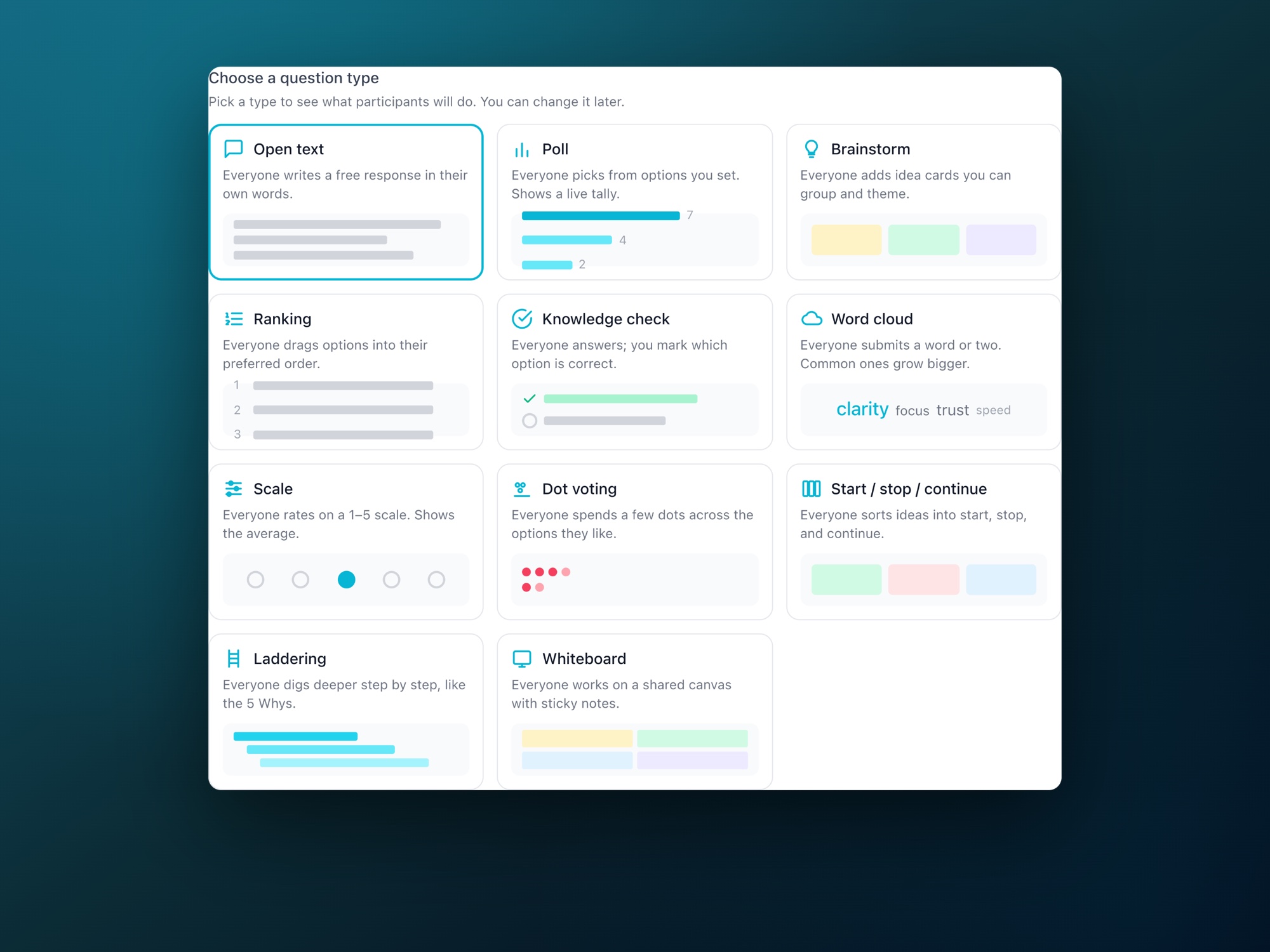
When you build a session in WeEngage, the first thing you do is pick a question type. There are eleven of them, and the picker shows you what participants will actually do before you commit—so you can change your mind as the session takes shape.
But the real skill isn't knowing the eleven formats. It's matching the right one to the moment in front of you. A brainstorm asks for different thinking than a ranking. A quick poll surfaces a different kind of signal than an open response people have to sit with. The facilitators who get the most out of their groups aren't the ones who know every format—they're the ones who know which one a moment calls for.
Here's a plain-language guide to all eleven, grouped by what you're trying to do.
When you need a quick read on the room
These are fast. Everyone responds in seconds, and you get a shared picture you can react to live.
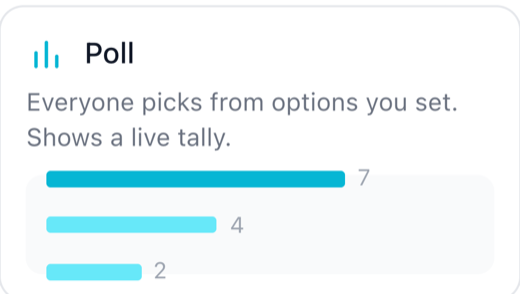 Poll — Everyone picks from options you set, and you see a live tally. Reach for it when you need a clear decision or a fast pulse: Which of these three directions should we commit to? It's the fastest way to turn a sprawling discussion into a visible choice. You can run it anonymously when people might otherwise just agree with whoever spoke first.
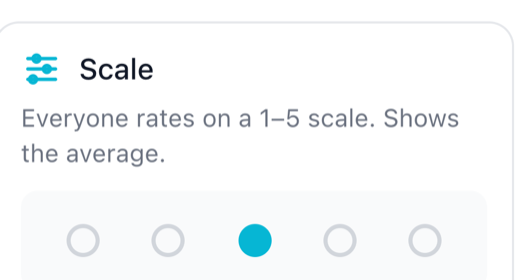 Scale — Everyone rates on a 1–5 scale, and you see the average. Use it when you want to know how aligned the group really is, not just whether they nod along. How ready do we feel to ship this? A tight cluster and a wide spread tell you very different things—and the spread is often the more useful conversation.
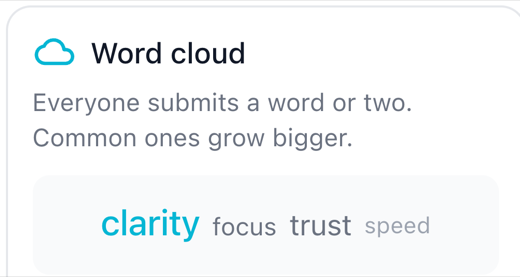 Word cloud — Everyone submits a word or two, and the common ones grow bigger. It's perfect for openers and temperature checks: In one word, how are you walking into this meeting? You get the shape of the room's thinking instantly, and shared words give people an easy way in.
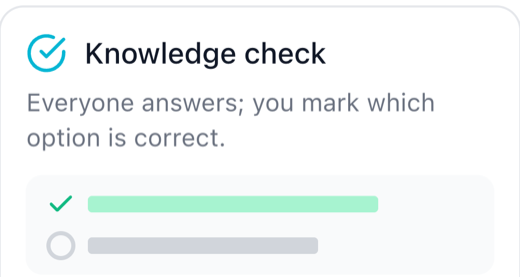 Knowledge check — Everyone answers and you mark which option is correct. Use it in training or onboarding when you need to see what landed and where the gaps are—before you move on as if everyone's with you. It surfaces what people actually took away, not what you hoped they did.
When you want people to think and write
These make space for real reflection. Slower, deeper, and often the difference between a meeting that moves people and one that just happens.
 Open text — Everyone writes a free response in their own words. This is your workhorse for genuine reflection: What's the one thing standing in our way right now? Because everyone writes at once, you hear from the people who'd never cut into a fast-moving call—not just the quickest voices. Turn on anonymity when the honest answer carries some risk.
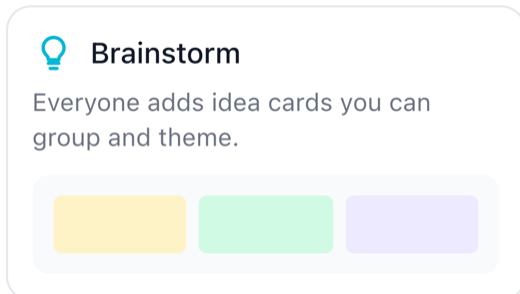 Brainstorm — Everyone adds idea cards you can group and theme. Reach for it when you're generating possibilities and want volume and variety before you start narrowing: What could we try? Everyone contributes at once instead of taking turns, and afterward you cluster the cards into themes so the patterns show themselves.
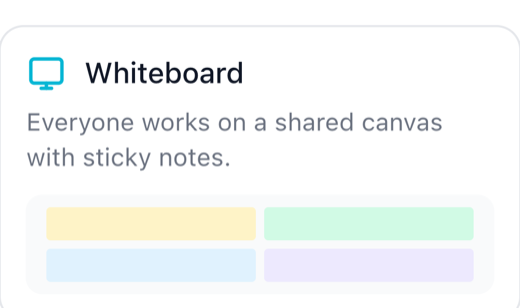 Whiteboard — Everyone works on a shared canvas with sticky notes. Use it when the thinking is spatial—a journey map, a workflow, an affinity exercise—and ideas need to live in relationship to each other. It's the most open-ended format, so it rewards a clear prompt and a little structure to start from.
When you need the group to prioritize or decide
Generating ideas is the easy part. These formats help the group show what it actually values when it can't pick everything.
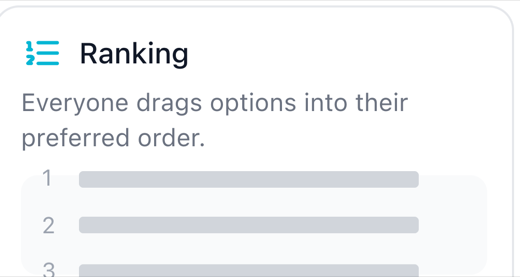 Ranking — Everyone drags options into their preferred order. Use it when you need to surface true priorities, not just what sounds agreeable out loud: Order these initiatives by impact. Ranking forces trade-offs, which is exactly why it reveals more than asking people whether each item is "important."
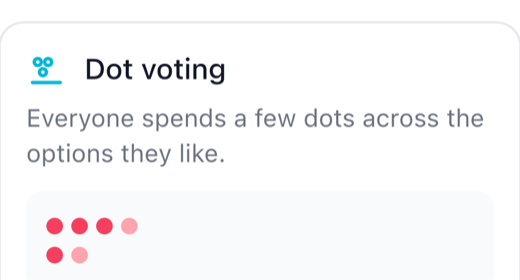 Dot voting — Everyone spends a few dots across the options they like. Reach for it when you're allocating something scarce—budget, focus, the next sprint—and you want people to show where they'd actually put it. Because each person has only a handful of dots, you see real preference instead of everyone endorsing everything.
When you want to go deeper or reflect as a team
These are built for understanding why, and for structured reflection that leads somewhere.
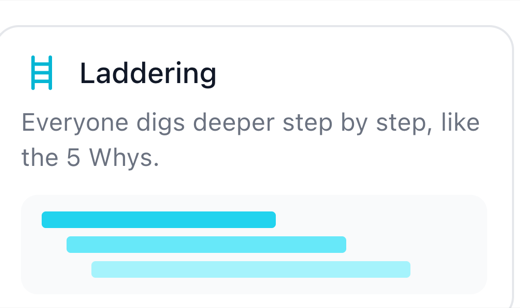 Laddering — Everyone digs deeper step by step, like the 5 Whys. Use it when a first answer isn't the real answer: you keep going—and why does that matter?—until the group reaches the belief or need underneath. It's how you get from a surface complaint to the thing actually worth solving.
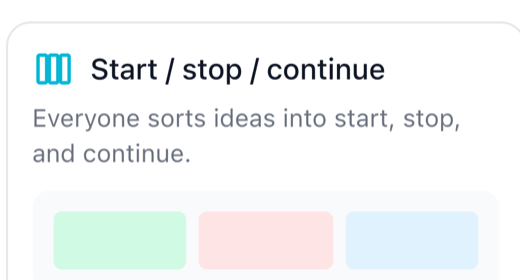 Start / stop / continue — Everyone sorts ideas into start, stop, and continue. It's your go-to retrospective format for feedback that's specific and actionable: What should we start, stop, and keep doing? The three buckets do the organizing for you.
The real move: sequencing them
The best sessions rarely use just one type. You might open with a Word cloud to read the room, run a Brainstorm to generate ideas, then Dot voting to narrow them, and close with an Open text reflection on what the group committed to. Each format draws out a different kind of thinking, and stringing them together is how a meeting builds momentum instead of circling.
You don't have to get it perfect the first time. Pick a type, see what it surfaces, and adjust. Over a few sessions you'll start to feel which moments call for speed, which call for reflection, and which call for the group to show what it really thinks—and that instinct is the craft.
Start your free trial—your first 30 days are free, no card required. Build your next session with the format each moment actually needs.